
About

All about skyAnchor™, our team and our technology.

Our mission is to be the global market leader for ultra-reliable UAV operations, making safe take-off, tether and landing possible in even the most complex and unpredictable environments

skyAnchor™ brings deep expertise in sensor technology and autonomous systems to solve one of the most critical challenges in UAV operations: reliable, autonomous control when conditions are at their most demanding.

Trusted for mission-critical deployments across 10+ countries, we have extensive experience developing and supporting bespoke Concepts of Operations (CONOPS), as well as integrating and optimising leading industry autopilots, including ArduPilot and PX4.

Our technology is designed to give UAV operators greater confidence in the moments that matter — from safe take-off and precision positioning through to reliable tethering and landing.

Behind skyAnchor™ is Cambridge Sensoriis Ltd, our UK-registered company and legal entity. Together, our expertise, technology and operational experience are focused on one goal: making autonomous UAV operations safer, more reliable and more capable, wherever they need to operate.

Our Team

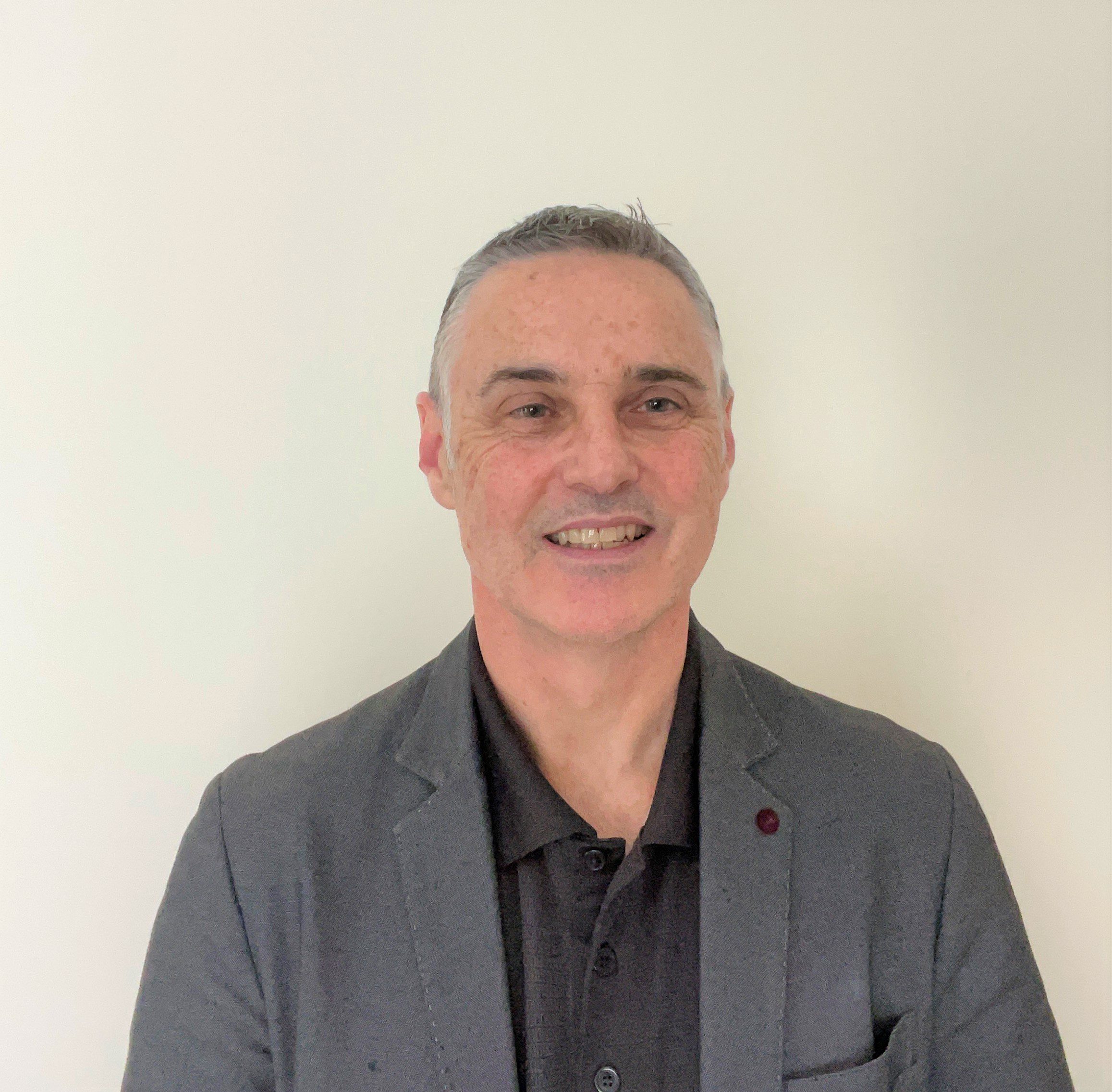
Mike Hall

CEO & Co-Founder
Mike was appointed CEO in April 2026. As the former CTO, Mike was instrumental in delivering skyAnchor's patented capability and has been with the company from its inception.
With an MEng Electronic Eng. 1st Class from Sheffield University and expertise in Algorithm design, digital signal processing and AI, Mike brings together significant technical prowess and a passion for team and customer success.
Mac Exon-Taylor

Sales Director
Mac is a veteran of B2B technology-led companies in various sectors, with extensive experience in Sales, Consulting and Senior Management throughout Europe and Asia Pacific.
With an honours degrees in operational research from Lancaster University, he is an experienced executive with a highly consultative and articulate style, specialising in taking lead roles in early-stage companies, pioneering new markets, and developing a scalable sales process.

Richard Higgs

Non-Executive Director (Chairperson – Board of Directors)
Richard has had several successful exits at Board/CEO level from trade sales to IPO across the digital tech, game and software services sector.

Dr Steve Clark

Dr Steve Clark

Founder & Non-Executive Director
Steve is Cambridge Sensoriis’ founder and has over 30 years’ experience as a founder and entrepreneur in radar technology for industrial automation. Former Co-founding Director of Navtech Radar Ltd, Steve earned his bachelor’s degree in Electronic Engineering and Physics at Loughborough University of Technology, and his PhD at the Australian Centre for Field Robotics at the University of Sydney.

Our Technology

For UAV take-off, tether and landing, FMCW mmWave radar offers a compelling combination of fundamental advantages:

  • Low SWaP — enabling compact, lightweight and power-efficient integration.
  • High precision — providing the range and motion accuracy required for repeatable autonomous operations.
  • Resilience in challenging conditions — maintaining sensing capability through rain, fog, dust and other conditions that can degrade optical systems.
  • Low dependence on visibility and ambient illumination — reducing susceptibility to the limitations and interference associated with vision-based approaches.

Our initial work used traditional radar techniques and demonstrated the underlying promise of radar-based landing and docking. However, we identified a fundamental limitation when applying conventional radar to the most demanding parts of the problem.

Traditional approaches typically infer the presence and identity of a landing or tether point from observed patterns, signatures or correlations. In effect, this introduces a confidence-based decision: the system determines that what it is seeing is sufficiently consistent with the expected target.

For safety-critical autonomous operations, we wanted something fundamentally different.

Rather than asking the radar to infer that an anchor point is present, we developed and patented Active Radar Co-operation (ARC™) — an end-to-end cooperative radar architecture in which the airborne and anchor-side radar systems actively participate in establishing the relationship.

This makes ARC™ more analogous to an RF communications system than to a conventional radar target-recognition problem.

The anchor can be:

  • Identified — the system can establish which cooperative anchor it is interacting with.
  • Authenticated — the airborne system can verify that the response originates from the intended cooperative anchor rather than simply matching an observed physical pattern.

The result is a fundamentally different approach to the final stages of autonomous UAS operation: the aircraft does not merely recognise an anchor; it cooperates with it.

Importantly, ARC™ does not require the radar hardware to become a single-purpose landing sensor.

Away from cooperative anchor units, the same radar-based transceivers retain conventional downward-facing radar capabilities, supporting functions including:

  • Obstacle detection
  • Altimetry
  • Odometry / motion estimation

This creates a single radar sensing platform capable of supporting the UAS across the operational cycle — from navigation and flight through to the highly constrained and safety-critical phases of take-off, tether engagement and landing.

In short, ARC™ combines the inherent environmental resilience and precision of FMCW mmWave radar with an active cooperative architecture, transforming radar from a system that recognises a landing point into one that can establish, verify and interact with a known anchor point.